
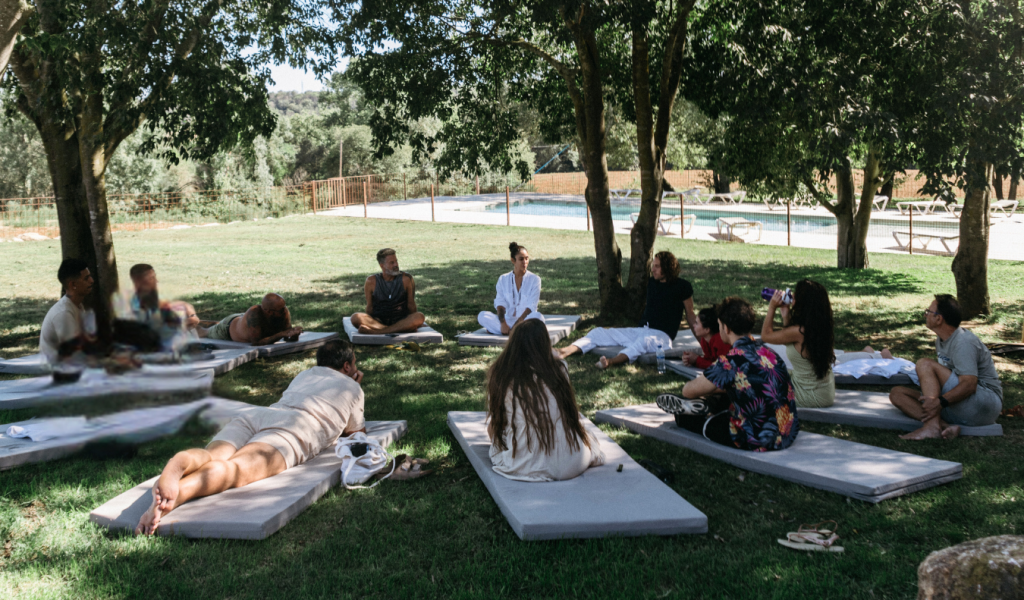
Why Plant Medicine Retreats Are Rising in Modern Life In modern life, presence has become a luxury. The Nervous System Crisis No One Talks About Plant medicine retreats are not becoming popular by accident. Their rise reflects a deeper physiological and existential shift happening globally. Modern life has conditioned the nervous system into chronic activation. Constant alerts, economic instability, social comparison, and high-performance culture keep the body in subtle vigilance. Over time, this state becomes normalized. Stress no longer feels acute — it feels ordinary. Although many individuals intellectually understand their trauma or emotional patterns, understanding does not automatically restore regulation. The mind may process insight; however, the body often remains contracted. Muscular tension persists. Sleep becomes shallow. Silence feels unfamiliar. Consequently, plant medicine retreats are increasingly sought as environments for nervous system recalibration. Through guided ceremonies, somatic integration, breathwork, and structured silence, participants enter a field designed for decompression. Unlike conventional approaches that rely primarily on cognition, these retreats address the body directly. Therefore, the growing interest in plant medicine retreats reveals something essential: the modern nervous system requires more than information. It requires embodied regulation. Beyond Insight: Why Experience Is Necessary Traditional therapeutic models often prioritize analysis. While insight is valuable, it does not always reorganize the unconscious layers stored in the body. Plant medicine retreats operate differently. Instead of only explaining patterns, they create conditions where those patterns can be felt, processed, and integrated. Through carefully guided ceremonies with sacred plants, unconscious material becomes accessible. However, what transforms the experience into healing is not intensity — it is containment. Moreover, when plant medicine is held within a trauma-informed environment, the nervous system remains supported while deeper layers surface. Safety allows regulation. Regulation allows clarity. Clarity allows integration. For many participants, this embodied process becomes the missing link between “I understand” and “I have changed.” Thus, plant medicine retreats are not simply spiritual gatherings. They are structured experiences that engage body, emotion, energy, and meaning simultaneously. Beyond Insight: Why Experience Is Necessary Cultural identity has shifted dramatically in recent decades. Fewer people identify with organized religion, yet the longing for meaning persists. Plant medicine retreats respond to this shift by offering spirituality without imposed belief systems. Rather than prescribing doctrine, these spaces facilitate direct experience. Ritual becomes experiential. Connection becomes embodied. Transcendence occurs with the body fully present. In addition, community plays a regulating role. Intentional group containers allow shared processing, which reduces isolation and strengthens integration. Collective presence amplifies safety while preserving individuality. As a result, these retreats often function as modern rites of passage. They provide structured transitions, moments of recalibration, and opportunities to reorganize identity beyond external roles. Importantly, this transformation is rarely dramatic. More often, it unfolds gradually, through increased coherence and emotional resilience. The Renewed Visibility of Ancestral Plant Medicine Retreats Plant medicine retreats are not a modern creation. They are rooted in ancestral lineages that have safeguarded these healing traditions for generations. What has changed is not the medicine itself, but the context in which it is now being sought. For centuries, Indigenous communities have worked with sacred plants as tools for spiritual alignment, community cohesion, and emotional purification. These practices were never designed as trends or therapeutic innovations. They were embedded within cosmologies, rituals, and relational systems that honored the interconnection between body, spirit, land, and community. Today, however, as modern life accelerates and fragmentation increases, more people are turning toward these ancestral practices with renewed recognition of their depth. The growing visibility of plant medicine retreats reflects a collective remembering rather than a cultural invention. Importantly, when held with respect, preparation, and proper integration, these retreats do not replicate something new. Instead, they create a bridge between ancient wisdom and contemporary psychological needs. What feels modern is the global access. What remains timeless is the medicine itself. A Return to Embodied Awareness Plant medicine retreats offer something increasingly rare: time without urgency, presence without performance, and connection without fragmentation. In a culture driven by acceleration, these spaces introduce rhythm. In a society shaped by productivity, they restore embodiment. And in an environment saturated with stimulation, they reintroduce silence as nourishment. For this reason, the rise of plant medicine retreats is not a trend. It is a response to physiological overload and existential fragmentation. When the nervous system recalibrates, perception shifts. When perception shifts, life reorganizes. That is why these retreats continue to grow — not because they promise escape, but because they facilitate coherence. Begin the Process With Presence Plant medicine is not about intensity. It is about alignment. If you feel called to experience these ancestral medicines within a safe, trauma-informed, and carefully guided environment, we invite you to take the next step. Our retreats are designed as complete processes — including preparation, ceremony, and integration — so that the experience becomes embodied transformation rather than a passing moment. When you are ready to explore this path with presence and support, learn more about our upcoming retreats through the button below. I want to know more! Master plan retreat blog Blog & News All Post Blog & News Holistic Therapies Sacred Medicines Sin categorizar Back Ayahuasca Rapé Sananga Kambó Back Tarot Reading Emotional Massage Breathwork Meditation Why Are Holistic Retreats Rising in Modern Life? February 16, 2026/No Comments Why Are So Many People Seeking Holistic Retreats Now? In modern life, presence has become a luxury. In recent years,… Read More What Are Holistic Therapies? November 29, 2025/No Comments What Are Holistic Therapies? A Complete Guide to the Healing Approach That Treats the Whole Human Being In a world… Read More Ayahuasca Group Sessions vs Private Sessions August 6, 2025/No Comments Ayahuasca Group Sessions vs Private Sessions In this blog post we will discuss what is better, Ayahuasca group Sessions vs… Read More Benefits of Sananga March 21, 2025/No Comments What are the Benefits of Sananga Discover the powerful benefits of Sananga eye drops in our Ayahuasca retreat Sananga experience… Read More Long-Term Benefits of Ayahuasca February 17, 2025/No
What Are Holistic Therapies?
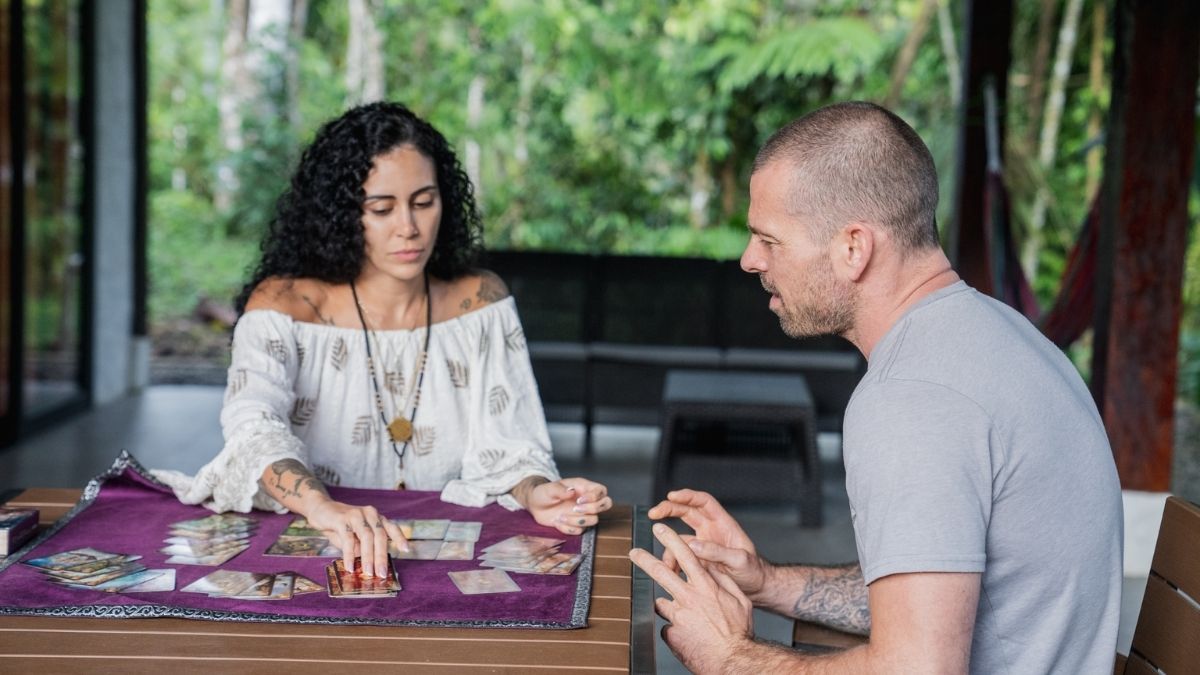
What Are Holistic Therapies? A Complete Guide to the Healing Approach That Treats the Whole Human Being In a world increasingly shaped by stress, emotional instability, and spiritual disconnection, many people are searching for deeper forms of healing. As a result, holistic therapies have gained growing attention — not as a trend, but as a path toward real transformation. Still, you may be wondering: what are holistic therapies, exactly? Although the term feels modern, holistic healing is ancient. In fact, its roots come from ancestral traditions, indigenous wisdom, and spiritual philosophies that view the human being as a complete and interconnected system. Rather than separating body and mind, these traditions recognize that everything within you is connected. For this reason, holistic therapies do not focus only on symptoms. Instead, they invite you to explore the root of what you feel — emotionally, mentally, physically, energetically, and spiritually. Throughout this article, you will discover what holistic therapies are, how they work, and why they often create lasting change. What Are Holistic Therapies, Exactly? Holistic therapies are practices that treat the human being as a whole. Instead of isolating a single symptom, they explore how body, emotions, beliefs, energy, and life experiences interact. In other words, healing is not about fixing one part. It is about restoring balance across all layers of your being. To understand this better, consider the following: The body often expresses what emotions cannot verbalize. Emotions are shaped by memories and beliefs. Thoughts are influenced by internal narratives and external experiences. Energy patterns can reflect unresolved trauma. The soul seeks meaning, direction, and alignment. Because these layers constantly interact, imbalance in one area can affect the others. Therefore, a holistic therapist does not ask only “What is happening?” They also explore “Why is this happening?” and “What needs to be understood, released, or integrated?” The Philosophy Behind Holistic Healing Holistic healing is grounded in simple yet powerful principles. Although different traditions use different tools, the core philosophy remains similar. 1. Everything Is Connected Your body, emotions, thoughts, and energy are not separate systems. Instead, they function as one integrated whole. For example, chronic stress may affect digestion, sleep, and mood at the same time. Because of this, holistic therapies look beyond surface symptoms. 2. Healing Begins Within Rather than treating only external manifestations, holistic work focuses on the internal environment that created them. When internal balance shifts, external results often follow. 3. The Body Moves Toward Balance When supported properly, your system naturally seeks equilibrium. Holistic therapies aim to remove obstacles so this natural intelligence can function. 4. Every Person Has a Unique Rhythm Not everyone heals in the same way or at the same speed. Therefore, holistic work respects timing and individuality. There is no universal formula. 5. Awareness Creates Transformation Understanding a pattern intellectually is not enough. True change happens when awareness becomes embodied and integrated into daily life. Holistic Therapies We Offer Now that you understand what are holistic therapies, it becomes easier to see how each method works as an entry point into a different layer of your being. At Master Plan Retreat, we do not separate emotional, energetic, ancestral, and spiritual work. Instead, we weave them together. Because healing rarely happens in isolation, our approach is integrative, grounded, and trauma-aware. Each therapy serves a specific purpose. At the same time, all of them support a unified intention: helping you reconnect with yourself in a safe and structured way. Below, you will find an overview of the holistic therapies we offer in both group and individual sessions. Therapeutic Tarot Reading Rather than predicting the future, Therapeutic Tarot works as a mirror of your inner world. Through archetypal symbolism and guided reflection, this session helps you explore subconscious patterns, emotional blocks, and life transitions. In many cases, what feels confusing begins to make sense once it is brought into awareness. For example, recurring relationship dynamics or difficult decisions often reveal deeper emotional roots. By looking at them consciously, you regain clarity and direction. Ultimately, this therapy helps you reconnect with your inner truth so you can move forward with intention. Soul Purification (Hebrew Pendulum Healing) This session focuses on energetic alignment. Using the Hebrew pendulum and vibrational techniques, we identify and release stagnant energy stored in the subtle body. As a result, emotional residue from past experiences can begin to dissolve. Many people seek this therapy when they feel drained, overwhelmed, or disconnected. Through sacred sound and focused intention, the session supports: energetic clearing chakra alignment restoration of vitality strengthening of spiritual protection In this way, Soul Purification acts as an energetic reset, helping your system return to balance. Soul Purification (Hebrew Pendulum Healing) This method integrates systemic family constellations, intuitive reading, somatic awareness, and shamanic field work. Because many emotional patterns originate in family systems, this session explores inherited dynamics and unconscious loyalties. Often, repeating cycles in relationships or self-worth issues are connected to deeper systemic roots. During the session, you may experience: guided movements healing statements ancestral reconnection symbolic release rituals By bringing hidden dynamics to light, space opens for clarity and inner strength. Holistic Massage & Energetic Alignment This is not simply a relaxation massage. Instead, it combines intuitive touch, aromatherapy, and energetic awareness. As tension releases from the body, emotional layers may also soften. Since the nervous system plays a key role in healing, this therapy supports regulation and grounding. Benefits often include: reduced stress emotional release improved circulation reconnection with the body In this way, physical touch becomes a bridge between body and emotion. Sound Healing Therapy Sound works directly with vibration. Because the body responds to frequency, sound therapy can gently recalibrate your system. Using Tibetan bowls, drums, tuning forks, and ancestral instruments, this session supports: deep relaxation nervous system reset emotional release chakra alignment Many participants experience meditative states that allow integration to occur naturally. Breathwork for Emotional Release Breath connects body and mind. Therefore, conscious breathing can access emotions stored beneath the surface. Through guided breathwork,