New clinical and neuroimaging research is starting to explain how ayahuasca supports emotional healing, from trauma recovery to self-compassion.
How ayahuasca supports emotional healing is being studied more seriously than ever. The findings are catching the attention of psychiatrists, not just spiritual seekers. For example, a talk at a recent Spanish phytotherapy congress laid out what current research actually shows. It came from a psychiatrist at a Barcelona hospital, someone who studies this connection closely.
The picture that emerges is more precise than the popular image of ayahuasca as a purely mystical experience. It is also more grounded. This matters at Master Plan Retreat, because our approach was built on exactly this intersection between ancestral medicine and clinical care.
We hold ceremony as sacred. However, we also take the clinical picture seriously. Understanding how ayahuasca supports emotional healing helps set honest expectations before anyone steps into a ceremony.
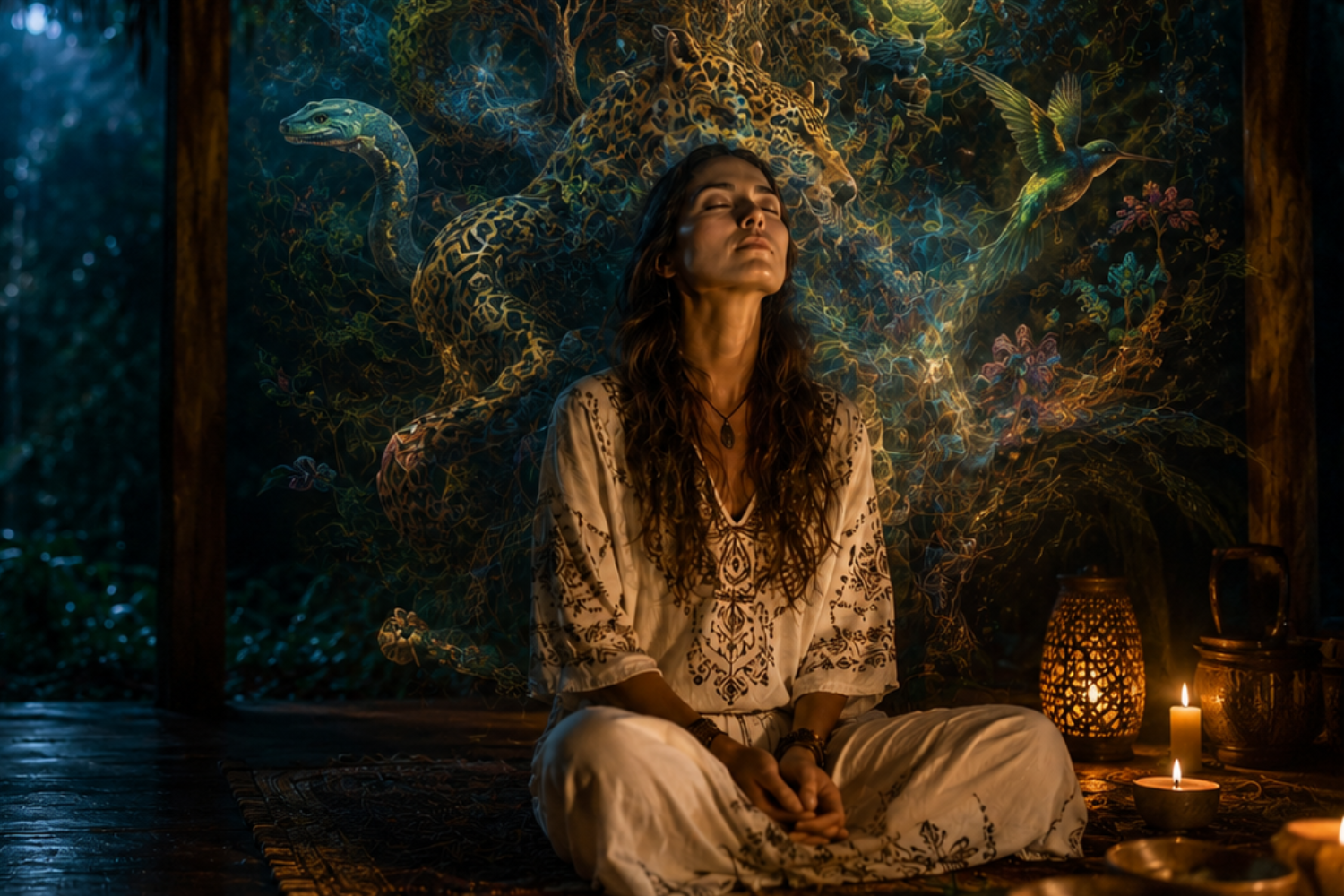
Ayahuasca is a decoction made from Banisteriopsis caapi, a vine containing beta-carbolines. It is combined with the leaves of Psychotria viridis, known as chacruna, which contains DMT. Together, these two plants produce a temporary shift in consciousness. That shift is marked by introspection, vivid imagery, and a surge of old memories.
Brain scan studies have found something specific. Ayahuasca activates emotional centers of the brain, including an area called the amygdala. It also activates regions tied to memory, such as the parahippocampal gyrus. In plain terms, the medicine seems to open access to emotional memory. Ordinary waking consciousness does not offer that same access.
This access is not incidental. Researchers now describe it as one of the mechanisms behind how ayahuasca supports emotional healing.
Safe exposure to emotional memory is a core ingredient in trauma-focused psychotherapy. Therapists spend years helping clients approach difficult memories slowly. The goal is to process pain without becoming overwhelmed by it. Similarly, ayahuasca appears to open a version of that same access, though within a much shorter window of time.
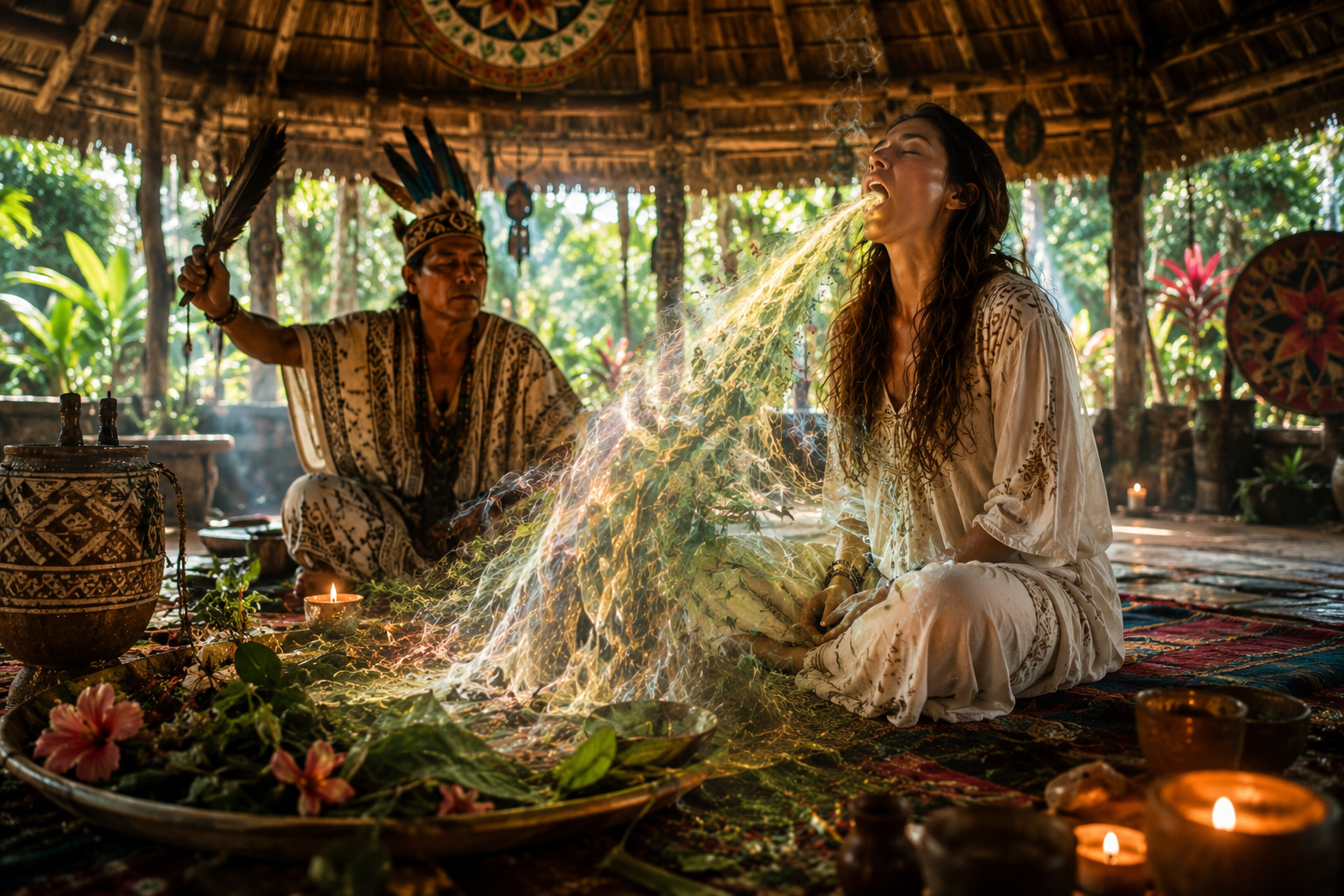
This is exactly why the setting matters as much as the plant itself. Exposure to old pain, without adequate support, can retraumatize a person instead of healing them. But with trained guidance, medical oversight, and structured integration afterward, that same exposure becomes workable material for real emotional healing.
A growing number of studies, both naturalistic and controlled, have reported real benefit for depression, anxiety, and substance use. Researchers describe ayahuasca as safe when it is given in the right setting. So safety, in this context, depends on the setting, not just the plant.
One specific finding from recent research concerns mindfulness-related skills. Studies report that ayahuasca use increases self-acceptance, emotional regulation, and self-compassion. These are measurable psychological skills, not vague spiritual claims.
These particular skills matter for conditions where trauma sits close to the surface. Borderline Personality Disorder is one example. Many first-line treatments for this condition target exactly these same skills. That overlap is part of why researchers keep studying how ayahuasca supports emotional healing as a joint clinical field.
None of this means ayahuasca replaces therapy for any diagnosis. It simply means the medicine appears to touch the same ground that trauma-focused treatment already works on. That connection is worth understanding, not dismissing.
Not everyone is a good fit for this kind of work. People with serious heart conditions, uncontrolled high blood pressure, or certain psychiatric diagnoses such as schizophrenia are asked not to participate. The same applies to anyone who is pregnant.
This is why a full medical review happens before every retreat at Master Plan Retreat. A dedicated physician looks at each person’s health history first. This step exists precisely because real emotional healing only holds up when safety comes first.
Research into ayahuasca is actively underway in Spain right now. Some studies focus on people experiencing prolonged grief. Others follow people who have used ayahuasca, tracking their outcomes a full year later. This kind of long-term work is what eventually turns anecdote into evidence, and it is still in progress.
For a closer look at the clinical mechanisms discussed here, the original presentation from the Sociedad Española de Fitoterapia is a useful primary source. You can read it here: potenciales efectos terapéuticos de la ayahuasca en salud mental.
If you want to understand how Master Plan Retreat holds this process, our page on what is ayahuasca explains the medicine itself. Our approach to holistic therapies covers how integration and trauma-aware support work alongside ceremony.
Research on how ayahuasca supports emotional healing is still young, but it already points somewhere useful. It suggests that ceremony alone is not the whole story. What happens before and after ceremony shapes the outcome just as much as the medicine itself.
That is why a thorough medical screening comes first at Master Plan Retreat. It is also why integration circles run every day, not just once at the end. The research gives language to something facilitators have long observed in practice.
Does research prove ayahuasca treats depression or anxiety?
Research shows real benefit in naturalistic and controlled studies, but this field is still evolving. Ayahuasca is not a substitute for diagnosis or ongoing psychiatric care. No retreat can honestly promise a specific clinical outcome.
Why does the setting matter so much if the effects come from the plant?
The medicine opens access to emotional memory. What happens with that access depends on the container around it. Trained facilitators, medical oversight, and integration support turn that access into something workable instead of overwhelming.
Is this research specific to one country or population?
Some of the studies referenced here come from ongoing work in Spain, including research with people experiencing prolonged grief. Findings from one group do not automatically apply to every person. That is one reason a thorough pre-retreat medical screening matters so much.
The science does not replace the sacred dimension of ayahuasca work. It does explain why structure, medical care, and integration are not optional extras layered on top of ceremony. Instead, they are part of what turns the emotional access the medicine offers into something a person can actually carry forward.
If this research raises questions about whether this path fits your own situation, that is exactly the kind of conversation worth having before you book anything.

New clinical and neuroimaging research is starting to explain how ayahuasca supports emotional healing, from trauma recovery to self-compassion.

Dr. Gabor Maté and Ayahuasca Healing: Trauma, Wholeness and the True Self Dr. Gabor Maté and Ayahuasca Healing: Trauma, Wholeness...

Ayahuasca in Spain: Benefits, Tradition, and Current Legal Context Ayahuasca in Spain: Benefits, Tradition, and Legal Context Today Interest in...

Why Plant Medicine Retreats Are Rising in Modern Life In modern life, presence has become a luxury. The Nervous System...

What Are Holistic Therapies? A Complete Guide to the Healing Approach That Treats the Whole Human Being In a world...

Ayahuasca Group Sessions vs Private Sessions In this blog post we will discuss what is better, Ayahuasca group Sessions vs...
Schedule a video call with us, and we’ll explore together if this experience is the right fit for you.
Chat with us